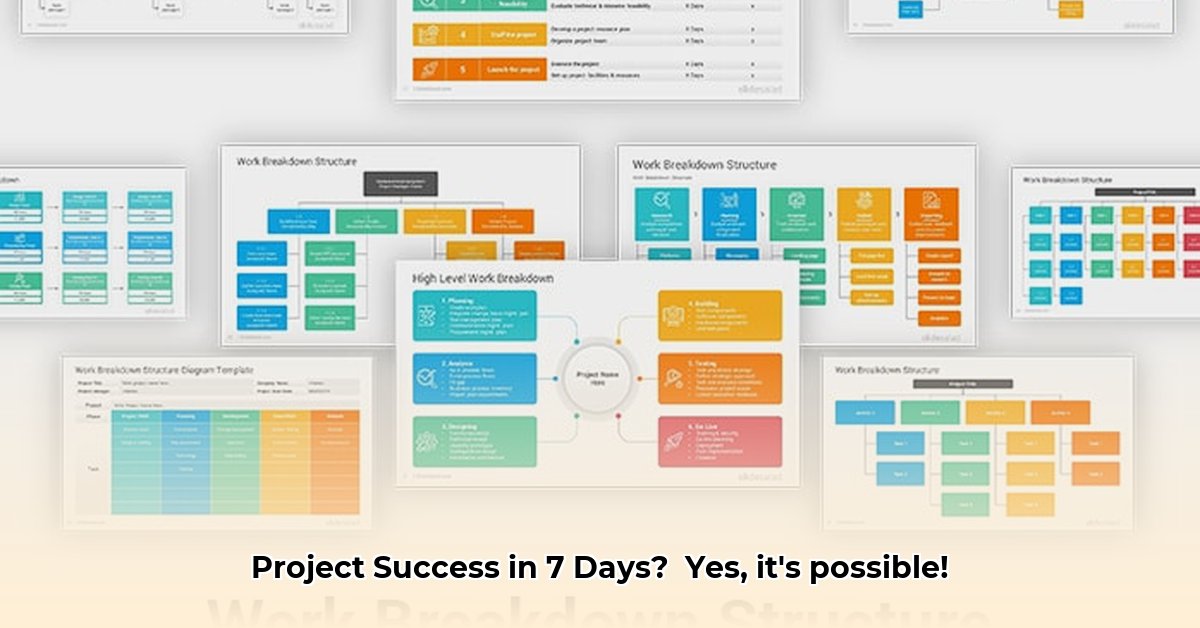
Let's face it: juggling multiple project tasks can feel overwhelming. But what if there was a simple, visual method to organize and manage your projects effectively? This guide introduces you to the power of Work Breakdown Structures (WBS) and demonstrates how to leverage PowerPoint to create efficient, impactful WBS templates. Within seven days, you'll transform from project-management novice to confident WBS pro.
Understanding the WBS: Your Project's Blueprint
A Work Breakdown Structure (WBS) is essentially a detailed project roadmap. It meticulously breaks down large, complex projects into smaller, easily manageable components. This structured approach simplifies planning, progress tracking, and ultimately, increases the likelihood of project success. Think of it as the blueprint for your project—a visual guide ensuring everyone involved shares a clear understanding of tasks and responsibilities. Without this clarity, projects often falter. Does your current project management strategy lack this vital clarity?
Choosing the Right WBS Structure: Tailoring Your Approach
There's no one-size-fits-all WBS structure. The optimal approach depends entirely on your specific project needs. Consider these three common strategies:
Deliverable-Based: Focuses on the final outputs. This structure is ideal for projects with clearly defined, tangible deliverables. For example, a website development project might list "Homepage," "About Us Page," and "Contact Page" as key deliverables, further broken down into individual tasks.
Phase-Based: Organizes tasks into distinct project stages. This method works best for projects with sequential phases. A product launch, for instance, could involve phases such as "Market Research," "Product Development," and "Marketing Campaign."
Hierarchical: Employs a tree-like structure, breaking down the project into increasingly granular levels of detail. This approach is most suitable for extremely complex projects requiring a high degree of task specificity.
The key is to select the structure that best aligns with your project's specific complexity and your need for detailed task definitions. A simple project may only require a deliverable-based structure, while a large-scale undertaking likely necessitates a hierarchical one.
Creating Your WBS PowerPoint Template: A 7-Step Guide
Now, let's build your WBS using PowerPoint. This step-by-step guide will equip you with the visual tools to create an effective project roadmap.
Project Scope Definition: Before opening PowerPoint, clearly define the project's goals, deliverables, and timeline. What are your objectives? What are the key milestones? This initial definition forms the foundation of your WBS.
Identifying Major Deliverables: List the main components of your project—the high-level tasks essential to achieving your goals. Ensure these deliverables are specific and measurable.
Breaking Down Deliverables: Divide each major deliverable into smaller, manageable sub-tasks. Keep these sub-tasks concise and action-oriented, focusing on individual actions needed to complete each deliverable.
PowerPoint Visualization: This is where PowerPoint's power shines. Utilize SmartArt graphics, tables, or even simple bullet points to create a clear visual representation of your WBS hierarchy. Experiment with different layouts to find the most effective visual representation for your project's structure.
Task Assignment & Responsibility: Clearly assign each task to a specific team member, fostering accountability and minimizing confusion.
Timelines and Budgets (Optional): Consider adding estimated timelines and budgets for each task. This provides valuable context and aids in resource allocation.
Iteration and Updates: Your WBS is a dynamic document, not a static plan. Regularly review and update it to accurately reflect the project's progress, addressing any changes to deadlines or task assignments.
Best Practices: Optimizing Your WBS for Success
Implementing these best practices ensures your WBS is both visually appealing and highly effective:
Crystal-Clear Deliverables: Use precise and measurable terms for each deliverable. Ambiguity is the enemy of effective project management.
Precise Task Assignment: Assign tasks to individuals or teams with the relevant skills and experience, ensuring each task is handled by the appropriate personnel.
Realistic Budgeting: Account for all potential costs, including both direct and indirect expenses. Detailed budgeting helps prevent unwanted cost overruns.
Proactive Risk Management: Identify potential risks and challenges. Develop contingency plans to address these potential roadblocks before they disrupt your project's progression.
Integrating with Project Management Software: Enhancing Workflow
While a PowerPoint-based WBS is a powerful tool, integrating it with project management software like Asana, Trello, or Monday.com can significantly elevate your project management capabilities. These platforms often enable seamless integration, automated reporting, and collaborative task management, streamlining workflows and keeping all stakeholders informed. Does improved collaboration sound appealing to you?
Templates and Resources
Numerous free and premium WBS templates are available online. A simple search for "free WBS PowerPoint templates" will yield a wealth of options to suit your specific needs. Remember to explore various resources to find the perfect fit for your project.
Conclusion: Elevate Your Project Management
Creating a WBS PowerPoint template is more than just building a visual aid; it's a critical step towards guaranteed project success. By breaking down complex tasks into manageable units and visualizing your project's structure, you will drastically improve team communication, increase efficiency, and significantly boost your chances of delivering your project on time and within budget. Ready to streamline your project management and achieve greater success? Start building your WBS today!
⭐⭐⭐⭐☆ (4.8)
Download via Link 1
Download via Link 2
Last updated: Sunday, May 11, 2025